Choosing the best safety wear for chemicals is essential for protecting staff, reducing workplace incidents, and maintaining safer day-to-day operations.
Businesses that handle cleaning agents, solvents, acids, fuels, powders, or other hazardous substances need PPE that is specifically matched to the risks involved. The wrong protective equipment can leave dangerous gaps in safety, increasing the likelihood of exposure, contamination, or injury.
Our guide explores how managers, supervisors, and buyers can confidently select reliable chemical safety wear that helps keep workers protected and operations compliant.
The best safety wear for chemicals must match the hazard
Not all chemicals create the same risks, and treating them as though they do is a common PPE procurement mistake. A worker handling diluted cleaning agents faces very different exposure hazards from someone working with concentrated acids, solvents, or powders. Effective protection depends on matching PPE to the real workplace risk.
Different hazards require different forms of protection:
- Liquid splashes increase the risk of skin and eye contact.
- Vapours, fumes, and airborne dusts may require respiratory protection.
- Corrosive substances demand chemically resistant materials rather than basic splash protection.
- Long-term exposure and spill scenarios require additional planning and protection.
The level of protection required also changes depending on:
- Chemical concentration
- Exposure duration
- Workplace ventilation
- Temperature and working conditions
For example, a diluted acid used occasionally in a ventilated area may only require gloves and face protection. The same substance, used repeatedly at higher concentrations, may require a chemical-resistant suit, respirator, and specialised footwear.
Before purchasing PPE, businesses should always:
- Review the Safety Data Sheet (SDS) for each substance
- Identify exposure risks through a workplace assessment
- Consider who is exposed and how frequently
- Ensure PPE matches the specific task and hazard level
Identify the real exposure risk before buying PPE
Before purchasing chemical PPE, businesses should assess the real exposure risks within the workplace rather than applying a one-size-fits-all approach. Questions to consider include:
Is exposure occasional or daily?
Workers handling chemicals regularly need PPE that is durable, comfortable, and suitable for extended wear. Occasional users may prioritise accessibility and ease of use.
Is the hazard airborne, corrosive, or related to liquid contact?
Vapours, mists, and dusts may require respiratory protection, while liquids and corrosives demand suitable gloves, eye protection, and chemical-resistant materials.
Is full-body protection necessary?
Some tasks require complete coverage through suits, hoods, and boot covers, while others only need targeted protection, such as gloves and goggles.
Matching PPE to the actual exposure risk helps improve safety, comfort, and long-term compliance.
Core PPE categories to consider in chemical work areas
Chemical PPE should never be viewed as a single product purchase, but instead as a complete protection system. Every area of the body exposed to risk requires suitable protection, and all PPE components must work together effectively without compromising comfort, movement, or performance.
Gloves: The first line of defence
Hands are among the most exposed body parts in chemical work environments, making glove selection a critical PPE decision. Glove material should always match the chemical being handled, as different substances affect materials in different ways.
Common glove materials include:
- Nitrile – suitable for solvents, oils, and diluted acids
- Neoprene – resistant to petroleum products and some acids
- PVC – commonly used with cleaning chemicals and mild acids
- Butyl rubber – effective against aggressive chemicals such as ketones and esters
Practical performance also matters. Buyers should consider:
- Grip when handling containers or equipment
- Dexterity for detailed tasks
- Cuff length for additional forearm protection
- Comfort during extended wear
Well-matched gloves improve both protection and compliance in chemical handling environments.
Eye and face protection to prevent serious injury
Chemical splashes, vapours, and mists can cause severe and permanent eye or facial injuries, making proper protection essential in chemical work areas.
Common protection options include:
- Safety goggles – provide a sealed fit against liquid splashes
- Safety glasses – suitable for lower-risk environments but less protective at the sides
- Face shields – offer broader facial coverage during mixing, transferring, or decanting tasks
When selecting eye and face protection, businesses should also consider:
- Anti-fog coatings for visibility
- Ventilation for wearer comfort
- Compatibility with other PPE
- Optical clarity during extended use
Comfort matters. If PPE restricts vision or becomes uncomfortable, workers are more likely to remove it, reducing overall protection and compliance.

Respiratory Protective Equipment for vapours, dusts and fumes
Respiratory hazards are among the most serious risks in chemical handling environments, and selecting the correct RPE is essential. Different airborne hazards require different forms of protection.
Common RPE options include:
- Half-face respirators – suitable for many vapour and solvent tasks
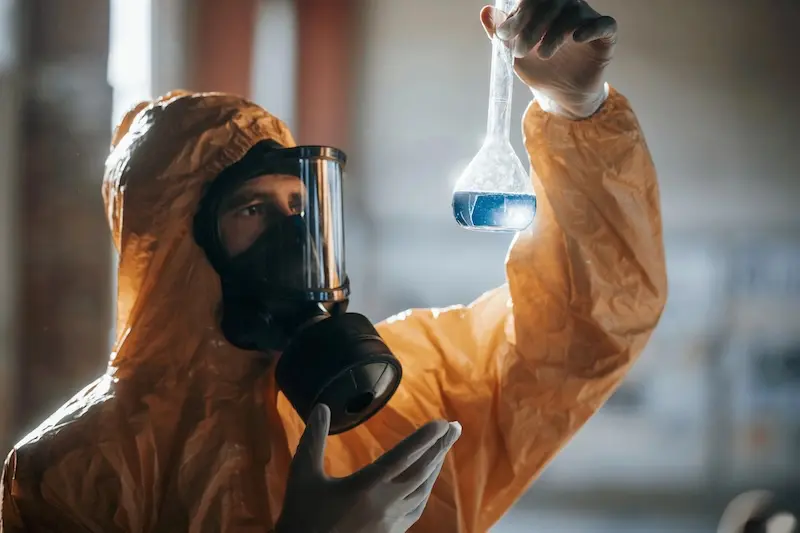
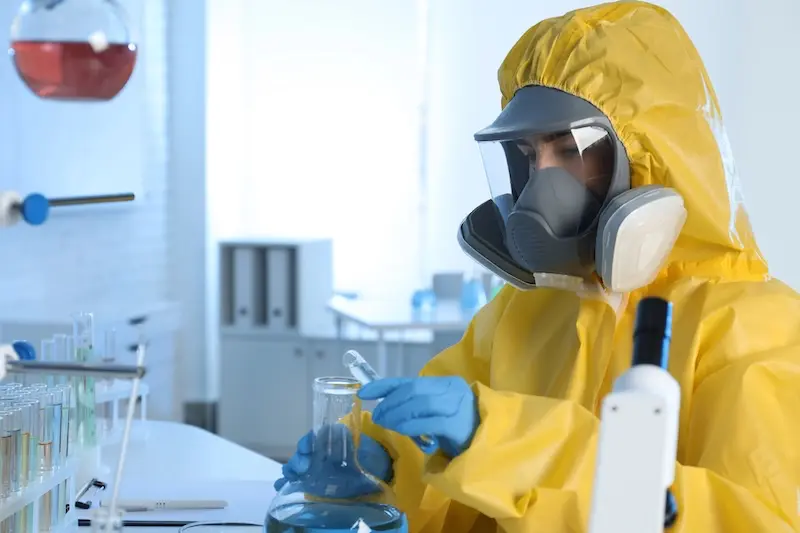
- Full-face respirators – provide respiratory and eye protection
- PAPRs – designed for prolonged or high-exposure environments
Filter selection must match the substance involved. Common filter types include:
- Organic vapour filters
- Acid gas filters
- Particulate filters
- Combination cartridges
Fit is equally important. A poorly sealed respirator allows contaminated air to bypass the filter entirely. Formal fit testing should be carried out before use and repeated if facial structure changes significantly.
Footwear and clothing for full lower-body protection
Feet, legs, and the lower body are often overlooked in chemical PPE planning, despite the risks created by spills, floor contamination, and runoff.
Suitable footwear should be selected based on the chemicals present on site. Common options include:
- Rubber and PVC boots – resistant to many acids and alkalis
- Specialist chemical footwear – designed for aggressive substances
- Slip-resistant soles – essential in spill-prone environments
Body protection should match the level of exposure:
- Disposable coveralls – suitable for high-contamination or occasional tasks
- Reusable chemical suits – practical for regular use
- Aprons and sleeves – ideal for targeted protection
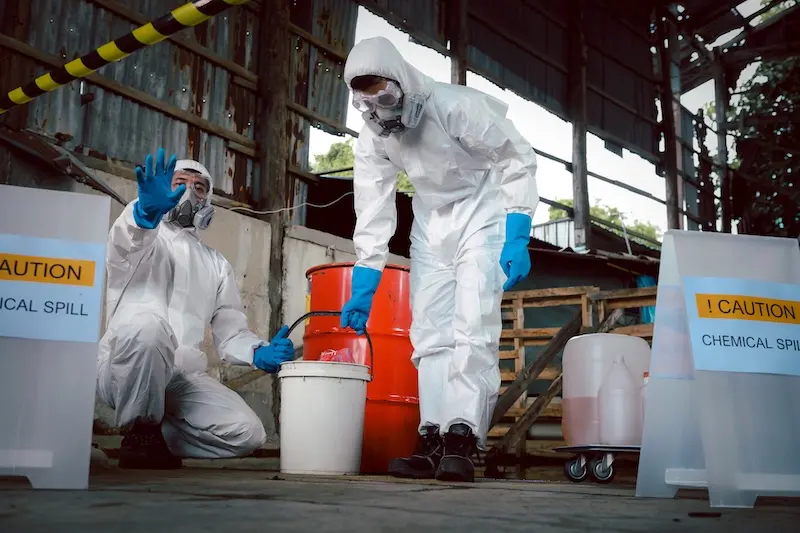
- Full chemical suits with hoods and boot covers – required for high-risk environments
Matching clothing and footwear to the real exposure risk improves both safety and practicality.
Our procurement checklist for the best safety wear for chemicals
Before purchasing chemical PPE, buyers should review the following questions to ensure protection is practical, suitable, and complete:
- What chemicals are handled on-site? Review SDS documents for hazard classifications and recommended PPE.
- How often are chemicals used? Exposure frequency and duration affect both protection levels and comfort requirements.
- Which body parts are exposed? Identify all exposure zones to avoid gaps in protection.
- Is the PPE compatible with other equipment? Gloves, goggles, respirators, and hoods should work together correctly.
- Is the correct sizing available? Poorly fitted PPE reduces protection and wearer compliance.
- Can stock be replenished reliably? Consistent supply is essential for ongoing workplace safety.
- Can the supplier provide expert guidance? Suppliers with PPE and chemical safety knowledge offer added value during procurement.
Choose us as your supplier of the best safety wear for chemicals
Protecting workers from chemical exposure starts with choosing PPE that is reliable, practical, and suited to the real hazards on site, but choosing the right supplier matters just as much.
Ark Safety helps businesses across Ireland and the UK source dependable chemical-safety PPE, backed by expert guidance, competitive pricing, and rapid next-day dispatch for stocked items ordered before 4pm.
From chemical-resistant gloves and protective clothing to respirators for vapours, dusts, and fumes, we supply the equipment businesses need to reduce exposure risks and maintain safer working environments, including:
With 95% stock availability, personalised support, and extensive industry knowledge, we make chemical PPE procurement simpler, faster, and more dependable. Contact us today to get started!
The best safety wear for chemicals FAQs
Q: What makes the best safety wear for chemicals in the workplace?
A: We recommend selecting chemical-resistant gloves, eye protection, respirators, protective clothing, and suitable footwear based on the specific hazards.
Q: What PPE is required when handling hazardous chemicals?
A: Chemical-resistant gloves, safety goggles, face shields, respirators, chemical suits, and protective footwear. We always advise matching PPE to the chemical type, exposure duration, and contamination risk.
Q: Why is Respiratory Protective Equipment (RPE) important in chemical work areas?
A: RPE helps reduce exposure to harmful vapours, fumes, airborne dusts, and chemical particles. We supply RPE, including half-face and full-face respirators, as well as filters designed for chemical-handling environments.
Q: What eye protection should workers use around chemicals?
A: Workers handling chemicals should use suitable eye and face protection, such as sealed safety goggles or face shields, to reduce the risk of splashes, vapours, and contamination injuries.
Q: How can businesses choose the right chemical-resistant clothing?
A: Businesses should assess chemical concentration, exposure frequency, and contamination risks before selecting PPE. We recommend using disposable coveralls for occasional exposure and reusable chemical suits or aprons for regular handling tasks.
Q: What safety footwear is best for chemical handling environments?
A: Chemical handling areas often require PVC or rubber safety boots with slip-resistant soles. Specialist chemical-resistant footwear may also be needed when working with aggressive substances or spill-prone environments.
Q: Why is proper PPE selection important for chemical safety compliance?
A: Proper PPE selection helps businesses reduce exposure risks, improve worker safety, and maintain compliance with workplace health and safety requirements. Matching PPE to the real hazard also improves comfort, practicality, and long-term wearer compliance.
Q: How often should chemical PPE be replaced?
A: Whenever it becomes damaged, contaminated, worn, or no longer provides suitable protection. Regular inspections and reliable stock replenishment will help maintain workplace safety standards.
Q: Where can businesses buy the best safety wear for chemicals in Ireland?
A: Businesses across Ireland can source chemical-resistant PPE from Ark Safety, including gloves for hazardous substances, respiratory protection for vapours and fumes, chemical safety eyewear, protective footwear, chemical suits, hearing protection, and first aid supplies.