Safety wear for food industry environments is essential for protecting workers, maintaining hygiene standards, and supporting compliance across Ireland’s food production, processing, and catering sectors.
Whether in commercial kitchens or manufacturing facilities, the correct PPE helps reduce workplace hazards while safeguarding food integrity. Food industry workplaces expose staff to risks such as cuts, slips, extreme temperatures, and cross-contamination. Properly selected and maintained PPE helps minimise these dangers and supports safer, more efficient operations.
This article explores the key types of safety wear used in the food industry, along with guidance on choosing the right equipment and maintaining compliance.
Why safety wear for food industry workers is critical in Ireland
The Irish food industry operates under strict health, safety, and hygiene legislation designed to protect both workers and consumers. Employers must comply with the Safety, Health and Welfare at Work Act 2005 and EU Regulation (EC) No 852/2004 on food hygiene. Both frameworks require hazards to be identified, assessed, and controlled, with PPE forming a key part of that process.
HACCP principles are closely tied to PPE usage. Protective clothing, gloves, and hygiene barriers help control biological, chemical, and physical contamination risks throughout food handling and processing operations. Failing to provide suitable PPE can result in workplace injuries, food contamination incidents, and potential regulatory breaches.
Food industry environments expose workers to several common hazards, including:
- Cross-contamination from raw foods, allergens, or poor hygiene controls
- Cuts and lacerations from knives, slicers, and deboning equipment
- Slips and falls caused by wet or greasy floors
- Heat stress or cold exposure in kitchens, freezers, and processing areas
Employers are legally responsible for carrying out risk assessments and supplying suitable PPE, while employees must use that equipment correctly and report any defects or concerns.
Core categories of safety wear for food industry workers
Effective PPE starts with understanding the major categories of protection required across different food industry roles. While not every worker will require every item, employers should understand how each category relates to specific workplace hazards.
Protective clothing and hygiene barriers
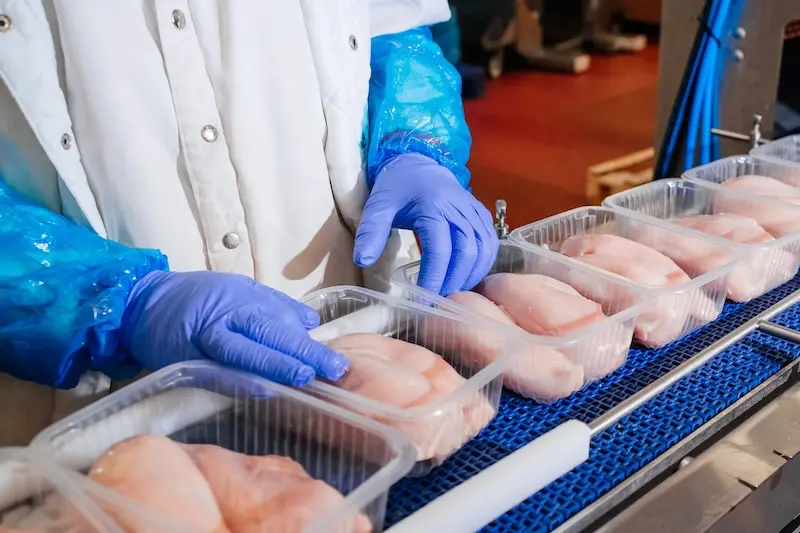
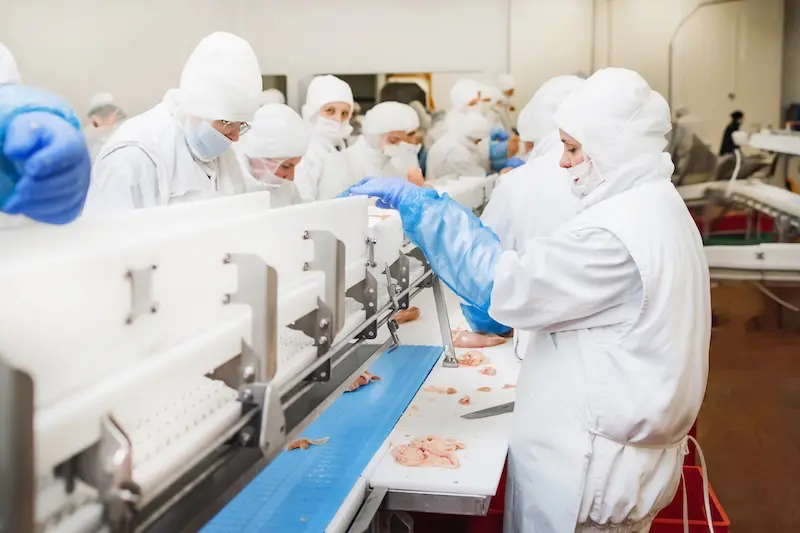
Safety wear for food industry workers typically begins with protective clothing, which helps protect both employees and food products from contamination and workplace hazards.
Common protective garments include:
- Lab coats for manufacturing and processing environments
- Waterproof or chain-resistant aprons for kitchens and butcheries
- Coveralls for higher-risk processing facilities
Disposable garments are often preferred in high-contamination environments, while reusable options can offer better long-term value when supported by reliable laundering procedures.
Hairnets, beard covers, and caps remain essential hygiene controls in most food-handling environments, helping reduce the risk of physical contamination.
Material choice also matters. Protective clothing should be durable, non-shedding, chemical-resistant, and comfortable enough to wear during long shifts. Poorly fitting PPE is far less likely to be worn correctly.

Hand protection and chainmail gloves
Hand protection requirements vary significantly depending on the role being performed.
Disposable gloves such as nitrile, latex, and vinyl are widely used for direct food handling. Nitrile gloves are commonly preferred due to their puncture resistance and suitability for workers with latex allergies. Gloves should always be changed regularly, especially after contamination risks or raw food handling.
Cut-resistant gloves are essential when working with knives, slicers, or chopping equipment. These gloves are rated under EN ISO 13997 standards, with different protection levels suited to different tasks.
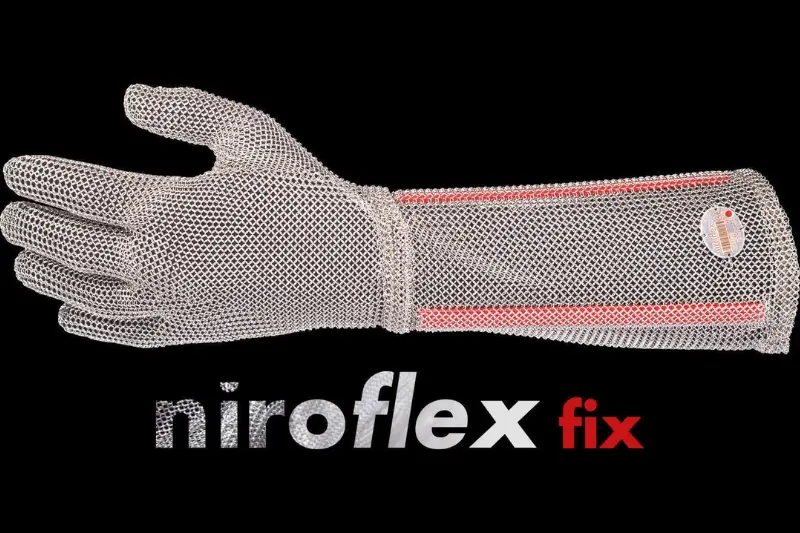
Chainmail gloves provide the highest level of cut protection and are critical in meat processing and professional butchery environments. They are typically worn alongside disposable gloves to maintain hygiene standards while protecting against severe lacerations.
Selecting the correct glove always involves balancing:
- Protection
- Dexterity
- Comfort
- Hygiene requirements
Safety footwear for food industry environments
Safety footwear plays a critical role in reducing workplace injuries within kitchens and food production facilities, where slips and falls remain a major risk.
Slip-resistant soles are the most important feature, as food industry floors are frequently wet, greasy, or contaminated with debris. Employers should ensure that footwear is suitable for the specific floor surfaces within their facility.
Additional important features include:
- Waterproof, easy-clean materials
- Steel or composite toe protection where required
- Ergonomic support for long shifts
Comfort is particularly important. Workers are less likely to comply with PPE requirements if footwear causes discomfort during extended periods of standing or walking.
Eye, face, and respiratory protection
Eye, face, and respiratory protection may not be required in every role, but they are essential in certain food industry environments.
Safety goggles and face shields help protect against splashes from:
- Cleaning chemicals
- Pressure washing
- Oils, sauces, and other processing liquids
Respiratory protection is necessary when handling powders such as flour or spices, or when using concentrated chemicals. Respiratory Protective Equipment (RPE) should always carry the appropriate EN certification for the hazard involved.
Hearing and head protection where applicable
Large-scale processing facilities may also require hearing and head protection.
Hearing protection is necessary where machinery or equipment regularly exceeds safe noise thresholds, while bump caps or hard hats may be required in areas with overhead hazards or low-clearance equipment.
As with all PPE, these requirements should be determined through workplace risk assessments rather than applied universally.
Key factors when choosing safety wear for food industry workers
Selecting the right PPE involves more than simply choosing the correct category of protection. Employers should consider several practical factors before making procurement decisions.
Key considerations include:
- Compliance with CE marking and relevant EN standards
- Proper fit and comfort to improve worker compliance
- Durability versus disposability based on contamination risks
- Compatibility between different PPE items
A one-size-fits-all approach rarely works in food industry environments. The hazards faced by a pastry chef, cold storage operative, and meat processing worker are completely different, meaning PPE should always be matched to the specific risks of each role.
Ark Safety: Your trusted supplier of safety wear for food industry companies
When it comes to food industry PPE, reliable supply, expert guidance, and trusted product quality matter just as much as compliance itself. Ark Safety helps food businesses across Ireland stay protected, efficient, and fully equipped with a comprehensive range of PPE and safety workwear solutions tailored to demanding food production, catering, and processing environments.
From disposable gloves and slip-resistant footwear to specialist chainmail protection and Respiratory Protective Equipment (RPE), we supply everything your operation needs under one roof, backed by expert support and rapid delivery.
Why choose us?
- Comprehensive range of PPE and food industry safety wear
- Safety clothing, waterproof workwear, and high visibility clothing
- Head, eye, hearing, and respiratory protection equipment
- Slip-resistant safety footwear for kitchens and processing facilities
- Disposable gloves, cut-resistant gloves, and specialist safety gloves
- Chainmail gloves, aprons, boleros, gauntlets, and chaps for butchery and meat processing
- Flame-resistant workwear, first aid supplies, and chemical spill equipment
- 95% stock availability on stocked items
- Next-day dispatch on orders placed before 4pm
- Competitive pricing across leading PPE brands
- Dublin-based, Irish-owned service with expert regulatory knowledge
- Personalised support to help you select the right PPE for every role
Whether you are upgrading your PPE programme, improving compliance standards, or sourcing reliable safety wear for a growing workforce, we deliver the products, expertise, and service needed to keep your operation safe, compliant, and running smoothly. Contact our team today and work safely!
Safety wear for food industry FAQs
Q: Why is safety wear for food industry workers important in Ireland?
A: Safety wear for food industry environments helps protect workers from injuries, reduces contamination risks, and supports compliance with Irish health and food hygiene regulations.
Q: What types of safety wear are most commonly used in the food industry?
A: Common food industry PPE includes protective clothing, disposable gloves, chainmail gloves, slip-resistant safety footwear, hairnets, respiratory protection, eye protection, and hearing protection.
Q: Why are chainmail gloves important in food processing environments?
A: Chainmail gloves provide a high level of cut resistance for workers using knives, slicers, and deboning equipment in butcheries and meat processing facilities.
Q: What features should safety footwear for food industry workers include?
A: Safety footwear should offer slip-resistant soles, waterproof and easy-clean materials, ergonomic comfort, and toe protection where necessary.
Q: When is Respiratory Protective Equipment (RPE) required in the food industry?
A: RPE is often required when handling powders such as flour and spices or when working with concentrated cleaning chemicals that may create airborne hazards.
Q: How does PPE help prevent food contamination?
A: PPE such as gloves, hairnets, beard covers, and protective clothing helps reduce biological, chemical, and physical contamination risks during food handling and processing.
Q: What should employers consider when choosing safety wear for food industry staff?
A: Employers should consider CE marking, EN certification, comfort, fit, durability, hygiene requirements, and compatibility between different PPE items.
Q: What food industry PPE products does Ark Safety supply?
A: We supply disposable gloves, cut-resistant gloves, chainmail gloves, aprons, slip-resistant safety footwear, RPE, eye protection, hearing protection, flame-resistant workwear, chemical spill equipment, and more.
Q: Why do food businesses across Ireland choose Ark Safety?
A: We offer a comprehensive PPE range, competitive pricing, expert regulatory knowledge, personalised service, 95% stock availability, and next-day dispatch on orders placed before 4pm.
Q: Does Ark Safety provide PPE for butcheries and meat processing facilities?
A: Yes. We supply specialist chainmail protection, including chainmail aprons, boleros, gauntlets, chaps, and gloves designed for demanding butchery and meat processing environments.