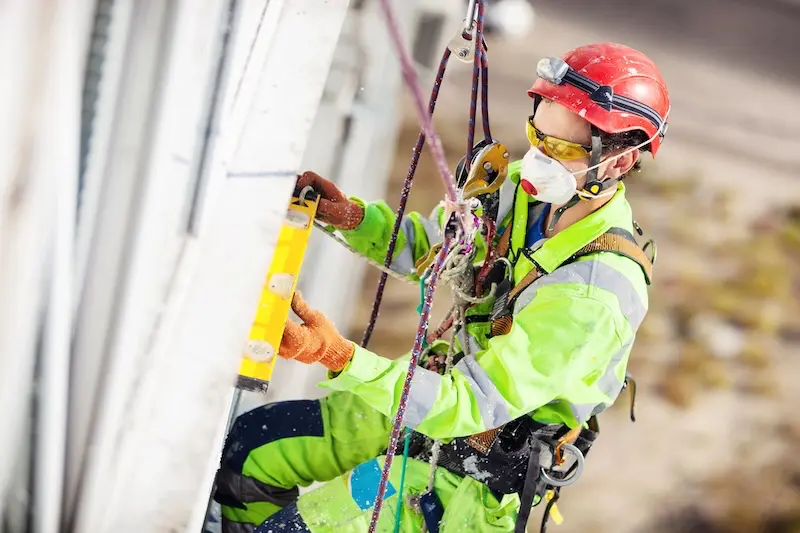
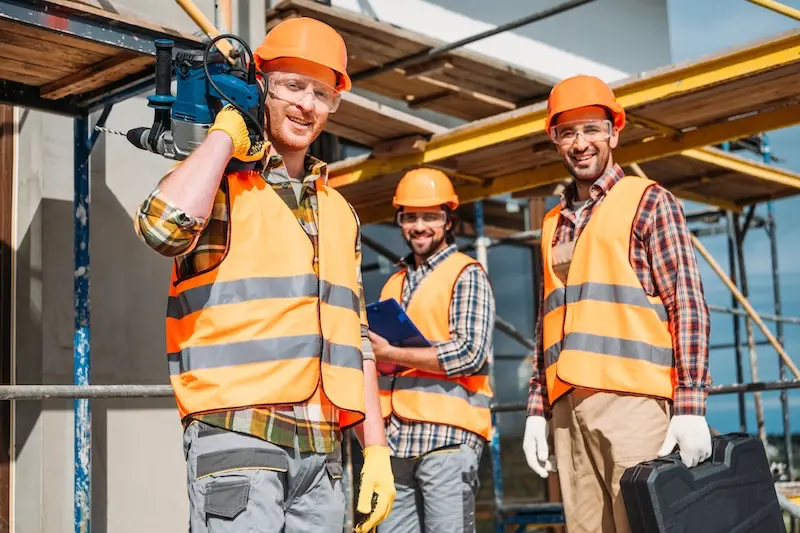
Safety wear for construction is a critical investment that protects lives, safeguards reputations, and keeps projects moving.
On modern building sites, where conditions shift daily and risks are ever-present, selecting and procuring the best PPE demands careful planning. Every sourcing decision influences worker wellbeing, legal compliance, and the operational stability of a contracting firm. Inadequate protection can result in serious injuries, costly delays, and significant legal penalties.
In this article, we discuss how to assess site-specific risks, ensure full regulatory compliance, evaluate suppliers effectively, and make informed, cost-efficient procurement decisions that support long-term project success.
Why safety wear for construction must start with risk assessment
Procuring protective equipment without first understanding the realities of the working environment is a common and costly mistake in construction. A “one-size-fits-all” approach rarely addresses the complex and evolving dangers of a live site. For this reason, every effective procurement process must begin with a thorough and methodical risk assessment. Only by clearly identifying site-specific hazards can firms ensure that their investment in protection is both appropriate and effective.
Conducting a site-specific hazard assessment
Identifying risks is a layered and ongoing process. Construction sites are inherently dynamic, frequently involving multiple subcontractors and overlapping work phases. As conditions shift, so too do the hazards. A comprehensive assessment should document risks such as:
- Working at Height: The potential for falls or injuries caused by dropped objects.
- Moving Plant and Vehicles: Hazards associated with excavators, cranes, forklifts, and general site traffic.
- Falling Objects: Dangers arising from overhead operations or structural instability.
- Dust and Airborne Particles: Exposure to silica, wood dust, fibres, or hazardous chemicals.
- Noise Exposure: Prolonged high-decibel levels generated by heavy machinery or pneumatic tools.
- Sharp Materials: Injuries linked to handling steel, glass, timber, or site debris.
Once these risks are identified, the hierarchy of control measures should be applied. While elimination and engineering controls remain the preferred solutions, Personal Protective Equipment serves as the critical final line of defence against residual hazards.
Selecting equipment that is tailored to the specific task ensures workers are properly protected without being encumbered by unnecessary or ill-suited gear. Importantly, risk assessments must be reviewed and updated regularly as projects progress from groundwork to structural build and, eventually, to fit-out.
Mapping hazards to required protection
After hazards are clearly categorised, they must be directly aligned with specific protection requirements. This ensures that equipment specifications reflect the actual operational demands of the site rather than theoretical risks.
- Head Protection: Essential wherever there is potential for impact injuries or falling debris.
- High-Visibility: Necessary in environments where workers operate near moving vehicles, plant machinery, or traffic routes.
- Hearing Protection: Required in high-noise zones to prevent cumulative and irreversible hearing damage.
- Respiratory Protection: Crucial in dusty or contaminated environments, with filters selected according to the type of particulate or vapour present.
- Protective Footwear: Must combine puncture resistance, slip resistance, and crush protection appropriate to the terrain and task.
- Eye Protection: Vital during cutting, grinding, welding, or chemical handling, where high-velocity particles or splashes pose a threat.
Clear mapping reduces ambiguity in procurement decisions and helps prevent overspending on unnecessary features while ensuring no critical protection gaps remain.
Legal & regulatory requirements for safety wear for construction
Compliance is not optional; it is a statutory obligation. Employers in both Ireland and the United Kingdom carry a defined duty of care under health and safety legislation to provide suitable protective equipment to employees at no cost. Understanding and navigating these legal frameworks is therefore a central part of the sourcing process.
Understanding compliance markings and certification
All protective equipment must meet recognised manufacturing and performance standards to ensure it functions reliably under stress. The most widely recognised indicators of compliance are the CE and UKCA markings. These symbols confirm that the product meets the relevant health, safety, and environmental protection standards for sale within the EEA and UK, respectively.
Equally important is a working knowledge of EN standards. For example, high-visibility clothing is governed by EN ISO 20471, while safety footwear typically falls under EN ISO 20345. These classifications define the level and type of protection provided. Partnering with reputable suppliers helps ensure that markings are legitimate, documentation is traceable, and products can withstand scrutiny during audits or site inspections.
Employer responsibilities in construction environments
An employer’s responsibility does not end once equipment is purchased. Ongoing compliance requires that PPE is:
- Suitable: Appropriate for both the identified risk and the individual user, without introducing additional hazards.
- Correct Fit: Ill-fitting equipment is often ignored or misused and may create snagging or trip risks.
- Maintained and Replaced: Systems must be in place to inspect equipment regularly and replace items that are worn, damaged, or expired.
- Used Correctly: Training is a legal requirement. Workers must understand how to wear, adjust, store, and maintain their equipment to ensure continued effectiveness.
A structured approach to these responsibilities strengthens both safety performance and regulatory compliance.

Key factors when sourcing protective equipment
Effective procurement requires balancing quality with cost while ensuring equipment remains fit for purpose throughout the project lifecycle. When evaluating options, four core considerations should guide decision-making:
#1. Quality and durability
Construction environments are demanding and unforgiving. Equipment must withstand exposure to harsh weather, abrasion, repeated impact, and heavy use. While lower-cost options may appear budget-friendly at first glance, they often deteriorate quickly, resulting in frequent replacements and higher long-term expenditure. Investing in durable materials typically reduces overall lifecycle costs.
#2. Fit, comfort, and workforce adoption
Protective equipment must be worn consistently to be effective. If gear is restrictive, poorly ventilated, or uncomfortable, compliance will inevitably decline. Breathable fabrics, ergonomic design, and lightweight materials all contribute to higher adoption rates. Inclusive sizing ranges are equally important, ensuring that all workers (regardless of build or gender) have access to equipment that fits correctly and safely.
#3. Supplier reliability and stock availability
Delays in PPE delivery can halt operations entirely. Reliable suppliers demonstrate consistent stock availability, realistic lead times, and the capacity to respond quickly to urgent orders. For larger projects, stock depth and supply chain resilience are critical to maintaining uninterrupted site operations.
#4. Total cost of ownership
The upfront purchase price represents only part of the overall cost. Total cost of ownership includes maintenance, replacement frequency, storage considerations, and the potential financial consequences of substandard equipment, such as injury-related downtime or regulatory penalties. A long-term perspective on budgeting often reveals that higher-quality equipment delivers stronger financial value over time.
How to evaluate a PPE supplier for construction projects
Selecting the right safetywear supplier is as important as selecting the right product. When assessing a potential partner, prioritise experience within the construction sector. A generalist supplier may lack insight into the differing demands of a reinforced concrete frame project compared to a high-specification interior fit-out.
Evaluation criteria should include:
- Range of Products: Can the supplier provide comprehensive head-to-toe protection, or will multiple vendors be required?
- Technical Support: Do they offer informed guidance on applicable EN standards and site-specific requirements?
- Delivery Performance: What are their proven lead times and historical fulfilment rates?
- Communication: Is there a dedicated point of contact who understands the pace and urgency of construction schedules?
A structured evaluation process ensures that supplier partnerships support safety, efficiency, and long-term operational resilience.
Ark Safety: Your trusted partner for safety wear for construction
Safety is the foundation of every successful construction project. Once risks are assessed and compliance is mapped out, the final step is choosing a supplier that can deliver certainty, speed, and expertise.
Ark Safety combines 95% stock availability with next-day dispatch, ensuring your site never slows down due to supply delays. As a Dublin-based, Irish-owned full-service provider supporting projects across Ireland, the UK, and Europe, we supply:
Backed by expert regulatory guidance, training support, competitive pricing, and in-house embroidery and branding solutions, Ark Safety delivers more than products; we deliver reliability. Strengthen your procurement strategy today; get in touch with us and build with confidence!
Safety wear for construction FAQs
Q: Why is risk assessment essential when sourcing safety wear for construction?
A: Risk assessment ensures we select safety wear for construction that directly addresses real site hazards, preventing protection gaps and unnecessary spending.
Q: What legal requirements apply to safety wear for construction in Ireland and the UK?
A: Employers must provide compliant PPE at no cost to workers, ensuring products carry CE or UKCA markings and meet relevant EN standards.
Q: How should hazards be mapped to the correct safety wear for construction?
A: Identified site hazards should be directly aligned with specific PPE categories, such as head, respiratory, hearing, or fall protection.
Q: What factors should be considered when choosing a supplier of safety wear for construction?
A: Construction firms should evaluate product range, compliance expertise, stock availability, delivery reliability, and sector experience.
Q: Why is “total cost of ownership” important when sourcing construction PPE?
A: Considering durability, replacement frequency, and compliance risks ensures safety wear for construction delivers long-term value rather than short-term savings.
Q: What types of safety clothing are typically required on construction sites?
A: Most sites require high-visibility clothing, safety footwear, head protection, respiratory protection, hearing protection, gloves, and fall protection.
Q: How does Ark Safety support safety wear for construction procurement?
A: We supply a comprehensive range of compliant safety clothing and PPE with 95% stock availability, next-day dispatch, and expert regulatory guidance.
Q: What makes Ark Safety a reliable construction PPE supplier?
A: As an Irish-owned provider, we combine competitive pricing, in-house branding, technical support, and dependable stock levels to keep construction projects moving safely.