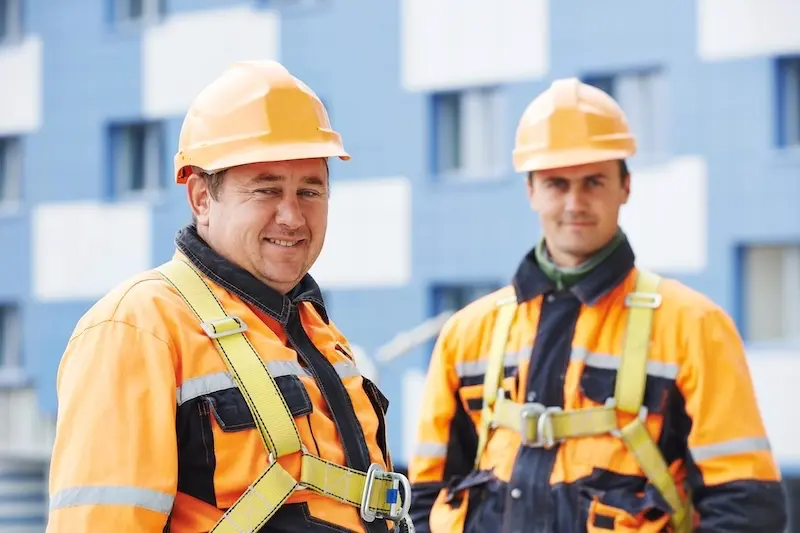
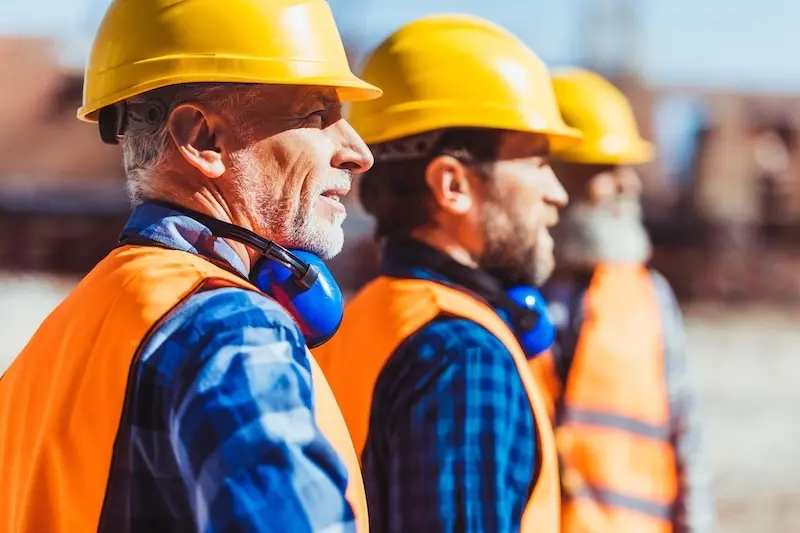
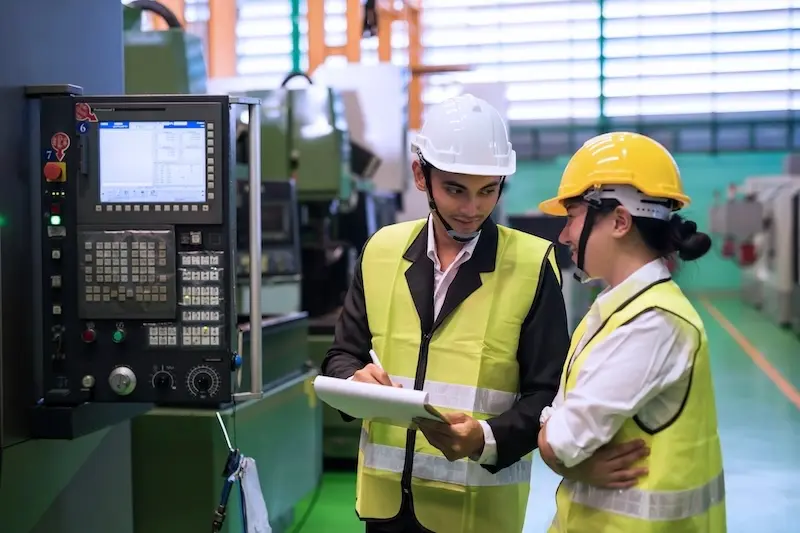
Head protection for high-risk environments is essential for protecting employees from falling objects, impact injuries and electrical hazards across construction sites, manufacturing plants, utilities networks and countless other demanding Irish workplaces.
However, the range of helmets, bump caps and visors now available means that selecting the wrong type of head protection can leave real gaps in worker safety, even where the product itself carries a valid certification.
In this article, we explore what makes head protection for high-risk environments genuinely effective, covering the hazards involved, the standards that apply, and how employers can select the right type of protection for their workforce.
Why head protection for high-risk environments matters
Under the Safety, Health and Welfare at Work (General Application) Regulations 2007, employers have a legal duty to provide personal protective equipment, including head protection, free of charge to employees where a workplace risk assessment identifies a genuine risk of head injury. This obligation, enforced by the Health and Safety Authority (HSA), makes head protection for high-risk environments a compliance requirement rather than a discretionary purchase for many Irish employers.
It is worth noting that head protection should be considered as part of a wider hierarchy of controls rather than a standalone safety measure. Wherever possible, employers should first look to eliminate or reduce overhead hazards through engineering controls, such as debris netting, toe boards or exclusion zones, and administrative controls, such as safe systems of work for tasks carried out at height. Head protection remains an important final layer of defence for the hazards that cannot be removed entirely.
The hazards behind head protection for high-risk environments
Understanding the specific hazards present in a workplace is the starting point for selecting appropriate head protection for high-risk environments, since different hazards call for genuinely different types of equipment.
- Falling and flying objects, such as tools, building materials or debris dropped from height
- Fixed overhead hazards, including exposed pipework, low beams, scaffolding and machinery that workers may strike their heads against
- Electrical contact hazards, where employees work near live conductors or exposed wiring
Employers should assess which of these hazards apply to a given role or work area before specifying head protection, since a single type of headgear will rarely address every hazard present on a site.
Understanding the standards behind head protection for high-risk environments
Head protection sold in Ireland should comply with the relevant EN standard for its intended use and carry a CE mark confirming compliance under Irish and EU law. Understanding the differences between these standards helps employers avoid a common and potentially serious mistake: assuming that all headgear offers the same level of protection.
EN 397 & the new EN 397:2025 Industrial Helmet Standard
Industrial safety helmets, commonly known as hard hats, are tested to EN 397, which specifies requirements for absorbing impact from falling objects and resisting penetration. EN 397:2025 has now superseded EN 397:2012+A1:2012, one of the most significant updates to helmet standards in decades.
- Type 1 helmets absorb impact to the crown of the head only, broadly in line with the previous standard
- Type 2 helmets are tested for impact protection to the crown as well as the side, front and rear, making them more suitable for tasks involving working at height or other higher lateral-impact risks
- Existing stock: helmets already certified to EN 397:2012 remain valid and can continue to be used until their individual certification expires, so there is no requirement to replace compliant stock immediately
- What to check when specifying new helmets: the Type 1 or Type 2 classification, particularly for roles involving work at height
- Markings to check before purchase: the relevant EN standard, manufacturer’s name, date of manufacture, model reference and shell material
EN 812 & Bump Caps
Bump caps are tested to EN 812, a separate and considerably less demanding standard than EN 397. Bump caps are designed to protect against minor bumps and scrapes when a worker strikes their head against a fixed, stationary object, such as low pipework or shelving, rather than against the impact of a falling or flying object.
A bump cap should never be used as a substitute for an EN 397 helmet in areas where objects could fall from height, since it is not designed or tested to absorb that level of impact.

Choosing the right type of head protection for high-risk environments
Selecting appropriate head protection for high-risk environments depends on matching the equipment to the specific hazard, task and working environment, rather than defaulting to a single style of headgear across an entire site.
Industrial safety helmets vs bump caps
Industrial safety helmets are appropriate wherever there is a risk of objects falling from height, such as construction sites, warehouses with high racking, or any location where work takes place above ground level. Bump caps are more appropriate in lower-risk settings, such as food production lines, confined spaces or maintenance areas, where the primary hazard is bumping the head against a fixed object rather than a falling load.
Visors & accessories
Many industrial helmets can be fitted with additional accessories, including chin straps, integrated visors, ear defenders and eye protection. Where these accessories are used, employers should confirm that they are compatible with the specific helmet model, since not all accessories are interchangeable between manufacturers or helmet ranges.
Matching head protection for high-risk environments to different sectors
The best head protection for high-risk environments varies considerably by sector:
- Construction and utilities: industrial safety helmets, often Type 2 rated where work at height is involved
- Manufacturing and food processing: bump caps in areas with low clearances or fixed machinery, alongside helmets where overhead lifting takes place
- Warehousing and facilities management: a mix of helmets and bump caps depending on the specific task and area of the site
Fit, comfort and procurement considerations for head protection
Comfort and consistent wear
Head protection that fits poorly or feels uncomfortable is less likely to be worn consistently, which undermines its effectiveness regardless of its certification. Employers should consider ventilation, adjustable harness systems and overall weight when specifying helmets or bump caps, particularly for employees required to wear head protection for extended periods.
Why supplier reliability matters
A competitive price on head protection for high-risk environments has limited value if a supplier cannot maintain stock availability or advise employers on the correct type, class or standard for their specific hazards. A knowledgeable supplier can help employers avoid the cost and safety risk of specifying unsuitable equipment, which is often a more significant saving than pursuing the lowest unit price alone.
Source head protection for high-risk environments from Ark Safety
Protecting your workforce starts with sourcing head protection that has been properly matched to your workplace hazards, backed by genuine product knowledge and reliable supply.
We supply a comprehensive range of head protection for high-risk environments, including industrial safety helmets, bump caps, safety hats, protective visors and related accessories, from leading manufacturers including 3M, JSP, DeltaPlus, Portwest, Beeswift, Bolle and Peltor.
Why businesses across Ireland choose us:
- Wide range of quality, compliant head protection
- Expert guidance on selecting the correct standard, type and class for your hazards
- 95% stock availability on stocked items
- Orders before 4pm dispatched for next-day delivery
- Personalised service from an experienced team
- Competitive pricing designed for genuine long-term value
From construction and manufacturing to utilities, warehousing and facilities management, we help businesses across Ireland source reliable head protection for high-risk environments, backed by expert knowledge and dependable service. Get in touch with our team today to find the right head protection for your workforce!
Head protection for high-risk environments FAQs
Q: What counts as head protection for high-risk environments?
A: Head protection for high-risk environments typically includes industrial safety helmets, bump caps, protective visors and related accessories, each designed for a different type of head-related hazard.
Q: What is the difference between a safety helmet and a bump cap?
A: Safety helmets are tested to EN 397 and designed to absorb the impact of falling or flying objects. Bump caps are tested to the lighter EN 812 standard and protect against bumps and scrapes against fixed objects, not falling loads. A bump cap should never be used in place of a helmet where objects can fall from height.
Q: What is EN 397:2025 and does it change which helmets businesses should buy?
A: EN 397:2025 is the updated European standard for industrial safety helmets, replacing EN 397:2012+A1:2012. It introduces Type 1 (crown impact) and Type 2 (crown, side, front and rear impact) classifications, helping employers choose the right level of protection for tasks such as working at height. Helmets already certified to EN 397:2012 remain valid and usable until their certification expires.
Q: Is head protection a legal requirement in Ireland?
A: Under the Safety, Health and Welfare at Work (General Application) Regulations 2007, employers must provide suitable PPE, including head protection, free of charge, where a workplace risk assessment identifies a genuine risk of head injury.
Q: Which industries need head protection for high-risk environments most?
A: Construction, manufacturing, utilities, warehousing and logistics, and facilities management are among the sectors where head protection is most widely required, wherever employees face falling objects, overhead hazards or fixed obstructions.
Q: Can head protection alone guarantee a worker’s safety?
A: No. Head protection works most effectively as part of a wider hierarchy of controls, alongside elimination, engineering controls and administrative procedures, rather than as a standalone solution to overhead hazards.
Q: Does Ark Safety supply head protection for high-risk environments with fast delivery?
A: Yes. We supply a wide range of head protection, including helmets, bump caps, safety hats and visors from leading manufacturers, with 95% stock availability on stocked items and next-day delivery on orders placed before 4pm!