Workplace first aid supplies are one of the most basic legal obligations facing every Irish employer, regardless of size, sector or the number of people on site.
However, deciding what belongs in a kit, how many kits are needed and when specialist items such as eye wash or a defibrillator become necessary is rarely straightforward, particularly once a workplace grows beyond a handful of employees or introduces specific hazards.
In this guide, we outline what Irish law requires, how to size and stock workplace first aid supplies correctly, and how to match provision to the sector and hazards involved.
Why workplace first aid matters for Irish employers
Every employer in Ireland has a legal duty to ensure employees receive appropriate treatment if they are injured or fall ill at work, and workplace first aid supplies are the practical starting point for meeting that duty. Getting this right is about more than avoiding a compliance gap. The speed and quality of the first response to an injury can materially affect how well someone recovers, particularly in the minutes before a doctor, nurse or paramedic can take over.
Treating workplace first aid supplies as a genuine part of a workplace’s risk management, rather than a box-ticking purchase, ensures that employees have immediate access to appropriate equipment and materials when an incident occurs. That said, first aid provision should be understood as part of a wider safety framework rather than a substitute for identifying and controlling hazards in the first place.
What Irish law requires for workplace first aid supplies
The legal framework for workplace first aid supplies in Ireland sits within Chapter 2 of Part 7 of the Safety, Health and Welfare at Work (General Application) Regulations 2007 (S.I. No. 299/2007). These regulations place a duty on every employer to provide, or ensure the provision of, adequate and appropriate first-aid equipment at their place of work.
Assessing your workplace first aid supplies needs through risk assessment
There is no single fixed list of workplace first aid supplies that applies to every business. Instead, employers are required to assess their own workplace and determine what is adequate and appropriate, taking into account factors such as:
- The number of employees
- The nature of the work
- The degree of hazard involved
- The level of accidents typically arising
- The size and location of the workplace
- How employees are distributed across it
- Whether shift work or remote and isolated working affects access to first aid
First aid boxes, kits and rooms as workplace first aid supplies
Provision generally falls into three categories:
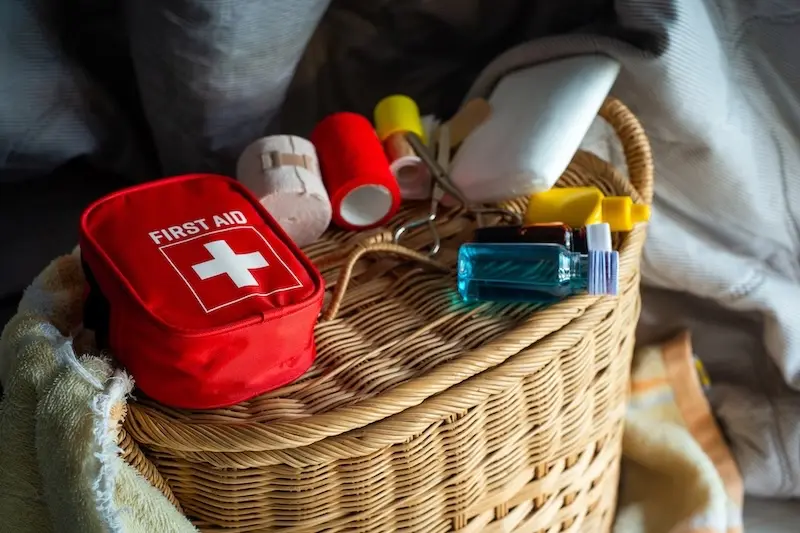
- A standard first-aid box or kit, appropriately stocked and easily accessible, which every workplace should have
- A smaller travel kit for employees who work away from their employer’s premises, particularly in isolated locations or roles involving dangerous tools or substances
- A dedicated first-aid room, fitted out to specific minimum standards, for larger or higher-risk workplaces where the size of the premises, the type of activity and the frequency of accidents make this necessary

Choosing the right workplace first aid supplies for your kit
Once the legal framework is understood, the practical question becomes what to actually put in the kit, and how much of it.
Workplace first aid by number of employees
The Health and Safety Authority provides recommended contents for occupational first-aid boxes and kits, banded broadly by the number of people employed, typically covering workplaces of up to 10, 11 to 25, and 26 to 50 persons, with quantities of items such as plasters, sterile dressings, triangular bandages and disposable gloves increasing at each band. Where more than 50 people are employed, provision should be scaled up accordingly. These bands are a useful starting point for procurement, though the final contents and quantities should still reflect the outcome of a proper risk assessment rather than headcount alone.
Special hazards and additional workplace first aid supplies
Workplaces with specific or unusual hazards, such as exposure to corrosive or oxidising substances, toxic or asphyxiant gases, or biological agents, may need workplace first aid supplies that go beyond the standard kit. This can include additional burn dressings, sterile water for eye or skin irrigation, or antidotes appropriate to the hazard concerned, sited as close as possible to where that hazard is present. Occupational first-aiders responsible for these areas may also need training beyond the standard first-aid qualification.
Matching workplace first aid supplies to your sector
The best workplace first aid also depends heavily on the sector and the specific tasks being carried out.
First aid for construction, manufacturing and warehousing
Construction sites, factories and warehouses tend to see a higher frequency of accidents involving cuts, falls and impact injuries, which generally calls for a greater number of occupational first-aiders relative to the workforce, along with kits positioned close to where work is actually carried out rather than centralised in a single location. Employees working across dispersed sites or travelling between locations may also need their own travel kits.
First aid for food processing and chemical-handling environments
Food processing and butchery environments are specifically identified in HSA guidance as requiring additional first-aider training due to the frequency and nature of injuries involved, while workplaces handling chemicals need to consider eye wash and skin irrigation facilities alongside their standard supplies. In both cases, the Safety Statement should identify the specific hazards involved and the workplace first aid supplies needed to respond to them.
Defibrillators, eye wash and other essential first aid supplies
Beyond the standard kit, several other categories of workplace first aid are worth considering as part of a complete setup.
Automated external defibrillators
The provision of an automated external defibrillator is recommended wherever an occupational first-aider is present, given its role in the chain of survival during a cardiac event. However, this is not treated as an absolute requirement for every workplace, and the HSA recognises that cost and maintenance considerations mean it may not be practical for every micro or small business, some of which choose to share equipment and training arrangements with nearby employers instead.
Emergency eye wash and shower stations
Where a risk assessment identifies exposure to hazardous substances, emergency eye wash and shower facilities become an important part of workplace first aid supplies. Where this equipment is provided, it should be easily accessible, regularly tested, and generally expected to meet the EN 15154 standard covering emergency safety showers and eye wash units.
Maintaining and restocking your first aid
First aid is only effective if it’s properly maintained. Contents should be checked regularly for missing, used or out-of-date items, with expired or unsuitable materials replaced promptly rather than left until the next scheduled review. Kits should also be clearly identifiable, protected from contamination by heat, damp or dust, and positioned somewhere that remains genuinely accessible during an emergency.
Source reliable, high-quality workplace first aid supplies from Ark Safety
Getting workplace first aid supplies right means matching the correct kit size, contents and equipment to your workforce and the hazards involved, and having a supplier on hand when stock needs replenishing.
We supply an extensive range of workplace first aid supplies, including:
- HSA-compliant first aid kits and boxes in small, medium and large sizes, plus refill packs
- Bandages, plasters, wound dressings and burn dressings
- Eye wash stations, pods and solutions
- Defibrillators
- Cold packs, hand sanitiser and hygiene dispensers
- First aid cabinets, fire safety products and test kits
Why businesses across Ireland choose us:
- Wide range of HSA-compliant workplace first aid supplies
- Competitive pricing designed for genuine long-term value
- 95% stock availability on stocked items
- Orders before 4pm dispatched for next-day delivery
- Personalised expert guidance on kit sizing and content selection
From construction and manufacturing to food processing, healthcare and facilities management, we help businesses across Ireland source first aid that is properly matched to their workforce and hazards. Get in touch with our team today to find the right workplace first aid supplies for your business!
Workplace first aid supplies FAQs
Q: What first aid supplies must a workplace provide by law in Ireland?
A: Every employer must provide first-aid boxes or kits under Chapter 2 of Part 7 of the Safety, Health and Welfare at Work (General Application) Regulations 2007 (S.I. No. 299/2007), with the exact contents, number of kits and any additional equipment determined by a workplace risk assessment.
Q: How do I know what size first aid kit my business needs?
A: HSA guidance broadly recommends kit contents by workforce size, typically 1 to 10, 11 to 25 and 26 to 50 employees, with provision scaled up pro rata above 50. The right size for your business should still be confirmed against your own risk assessment rather than headcount alone.
Q: Is a defibrillator a legal requirement in every Irish workplace?
A: Not automatically. The HSA recommends an automated external defibrillator wherever an occupational first-aider is present, but recognises this may not be practical for every micro or small business, some of which share equipment with nearby premises instead.
Q: Do all workplaces need emergency eye wash or shower facilities?
A: This depends on the outcome of a risk assessment and the hazardous materials used or stored on site. Where required, eye wash and emergency shower equipment is generally expected to meet the EN 15154 standard.
Q: How often should workplace first aid supplies be checked and restocked?
A: Supplies should be checked regularly for missing, used or out-of-date items, with expired or non-compliant contents replaced promptly to ensure kits remain ready for use at all times.
Q: Do employees need training to use workplace first aid supplies?
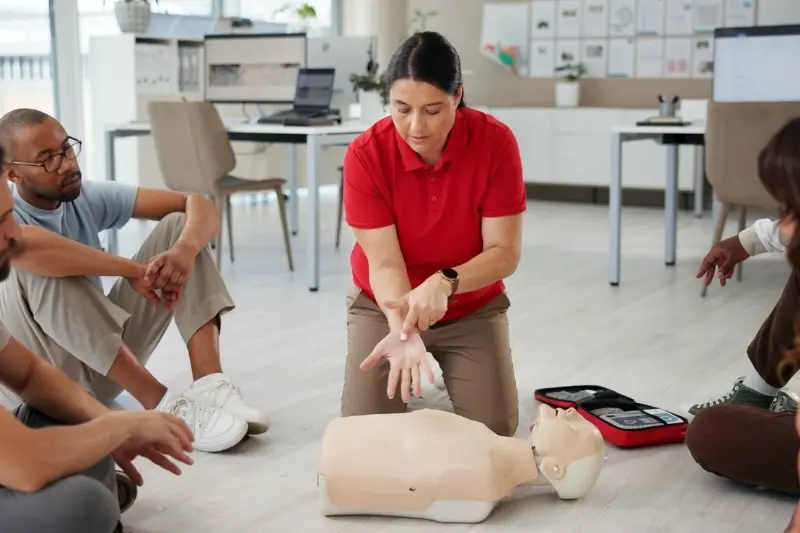
A: Basic kit contents can be used by anyone in an emergency, but Irish workplaces are also expected to appoint and train occupational first-aiders to the PHECC First Aid Response standard, with numbers based on workforce size and the hazards present.
Q: Does Ark Safety supply HSA-compliant first aid kits?
A: Yes. We supply a range of first aid kits, boxes and refill packs sized for different workforces, alongside bandages, dressings, eye wash, defibrillators and other workplace first aid supplies.