Implementing chainmail for food safety is a vital consideration for any food processing facility trying to maintain strict hygiene standards while protecting its workforce from serious injury. In fast-paced production environments, the risk of cut-related accidents is ever-present. From high-speed poultry lines to large-scale butchery operations, employees routinely work with razor-sharp blades and mechanical slicers capable of causing severe, life-changing injuries in a split second.
For safety officers and production managers, this creates a dual challenge. Personal protective equipment must offer reliable resistance against cuts and lacerations, yet also meet the uncompromising cleanliness standards required in food handling environments.
Chainmail, typically manufactured from high-grade stainless steel, has become widely recognised as an effective solution, delivering robust physical protection without compromising food safety or hygiene compliance – as we explore in this post.
Why chainmail for food safety is critical in high-risk food environments
High-risk food environments are defined by the constant presence of sharp edges and cutting tools. Whether it involves manual deboning, industrial slicers, or precision trimming tasks, the equipment used in these settings is engineered to cut through dense proteins with ease.
In such conditions, traditional fabric-based PPE, even products with high cut-resistance ratings, can struggle against concentrated point pressure from sharp knives or the snagging force of mechanical blades.
When a cut occurs, the impact on a business is immediate and far-reaching. Beyond the obvious concern for the injured worker’s health and safety, incidents can trigger production stoppages, introduce the risk of blood contamination on the line, and lead to costly product recalls.
By integrating chainmail for food safety into daily operations, managers establish a robust, low-failure physical barrier that significantly reduces the likelihood of these disruptive and potentially dangerous events.
Chainmail for food safety and injury prevention
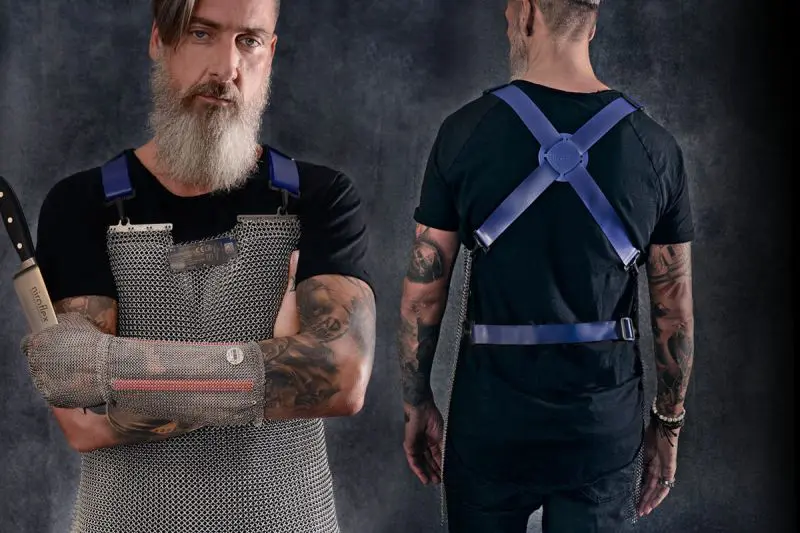
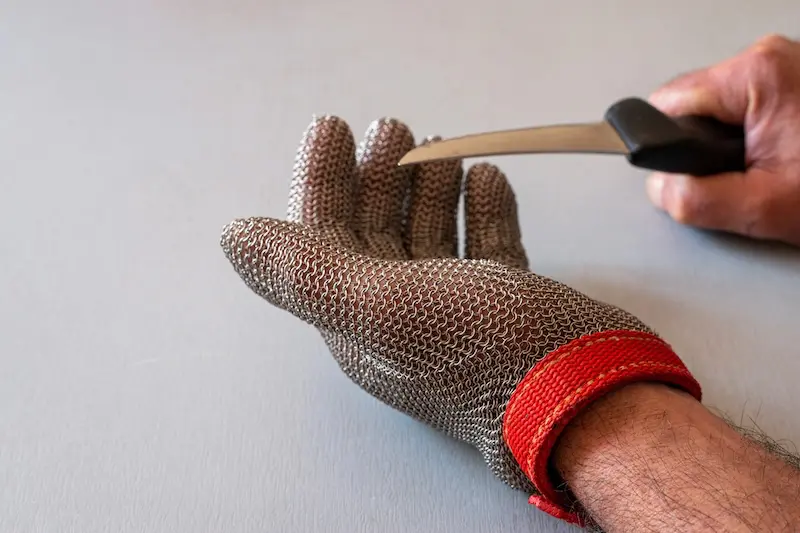
Chainmail PPE acts as a highly effective physical shield. Constructed from thousands of individually welded stainless steel rings, it delivers a unique combination of flexibility and strength. Unlike synthetic fibres, which can eventually be cut through under sufficient force, metal mesh is extremely difficult to penetrate using standard manual cutting tools.
This level of protection is particularly important for:
- Manual Cutting Tasks: Where blade movement frequently travels towards the operator’s body or supporting hand.
- Repetitive Knife Work: Where fatigue or routine can lead to brief lapses in concentration, making dependable PPE the final line of defence.
- High-Speed Processing: Where tasks are completed rapidly, and the margin for error is measured in millimetres rather than seconds.
Supporting food safety compliance through protective PPE
Food safety compliance is governed by strict hygiene controls and contamination prevention standards. For safety managers, compliance is about maintaining a controlled environment where products remain uncontaminated from intake through to final packaging.
Protective PPE plays a crucial supporting role in achieving these goals. When workers are properly protected by chainmail, the risk of bloodborne contaminants entering the food chain is dramatically reduced. In addition, stainless steel chainmail does not fray or shed fibres, unlike some textile-based alternatives, eliminating the risk of foreign material contaminating finished products.
Hygiene considerations when using chainmail for food safety
One of the key reasons chainmail is favoured in food environments is its excellent hygiene performance. In damp, protein-rich settings, bacteria can easily embed themselves in the pores of fabric or rubber materials. Stainless steel, by contrast, is non-porous and naturally resistant to corrosion.
Key hygiene benefits include:
- High-Pressure Washdowns: Chainmail can tolerate the intensive cleaning regimes used in industrial food facilities.
- Thermal Resistance: It can be sanitised using high-temperature dishwashers or autoclaves to achieve thorough sterilisation.
- Chemical Compatibility: Stainless steel remains stable when exposed to strong detergents and sanitisers commonly used in food processing.

Common food industry applications for chainmail PPE
The adaptability of chainmail makes it suitable for a wide range of food industry applications. While it is often associated with traditional butchery, its use extends well beyond this single area.
- Meat and Poultry Processing: Widely used for deboning, carving, and portioning tasks where knives operate close to hands, arms, and the torso.
- Fish and Seafood Preparation: Essential for filleting and shellfish handling, where wet, slippery conditions increase the risk of blade slippage.
- Commercial Catering: Common in large-scale preparation kitchens where dense foods or industrial cutting equipment are regularly used.
Tasks such as trimming, skinning, and dicing all benefit from the added reassurance that metal mesh protection provides, allowing employees to work efficiently without compromising personal safety.
Key factors to consider when selecting chainmail PPE
Selecting the appropriate chainmail PPE is not a one-size-fits-all decision. For protective equipment to be effective, it must be worn consistently, making comfort, fit, and usability critical considerations. A glove that is too loose can reduce dexterity or become caught in machinery, while one that is too tight may cause fatigue and discourage regular use.
- Correct Fit and Coverage: Options range from three-finger gloves for lighter trimming tasks to full-arm gauntlets and aprons designed for heavy-duty butchery.
- Ergonomics: Modern chainmail designs prioritise reduced weight and improved comfort, often incorporating adjustable tensioner bands to support natural hand movement.
- Compatibility: Chainmail is typically part of a layered PPE system and must integrate smoothly with under-gloves for insulation or outer nitrile gloves for moisture and liquid protection.
Integrating chainmail PPE into a broader safety strategy
Although chainmail is highly effective, it delivers the best results when incorporated into a wider safety framework. It should not replace training or safe working practices, but rather act as the final protective layer within a structured risk management approach.
This broader strategy should include:
- Risk Assessments: Identifying high-risk tasks and production line pinch points where chainmail use is essential.
- Staff Training: Ensuring workers understand how to correctly wear, remove, and clean their PPE.
- Regular Inspections: Checking for damaged rings or worn fasteners that could reduce protection or create snag hazards.
By embedding chainmail within a well-managed safety culture, businesses can maximise both worker confidence and operational continuity.
Explore specialist chainmail for food safety with Ark Safety
Protecting your people and safeguarding food safety standards demands PPE you can rely on, and a supplier who truly understands the pressures of food processing environments.
Ark Safety combines deep industry expertise with a comprehensive range of high-quality chainmail PPE, including:
As an Irish-owned supplier with 95% stock availability and rapid next-day dispatch, we make it easy to get the right solutions, exactly when you need them. Backed by personalised service, competitive pricing, and expert regulatory knowledge, our specialists work closely with you to match the right chainmail protection to your specific risks and operational demands.
If you’re ready to strengthen your safety protocols and protect your most valuable assets, chat to us today to review your PPE requirements and ensure your operation meets the highest standards of food safety and worker protection.
Chainmail for food safety FAQs
Q: What is chainmail for food safety, and why is it used?
A: Chainmail for food safety is stainless steel PPE designed to protect workers from cuts while supporting strict hygiene standards, making it ideal for high-risk food processing environments.
Q: How does chainmail help with food safety compliance?
A: Chainmail reduces the risk of blood contamination, prevents fibre shedding, and supports hygiene controls required for food safety compliance across processing and preparation areas.
Q: Is chainmail suitable for high-risk food processing tasks?
A: Yes, chainmail for food safety is particularly effective for manual cutting, deboning, filleting, and high-speed processing where sharp tools are used close to the body.
Q: How hygienic is stainless steel chainmail PPE?
A: Stainless steel chainmail is non-porous, corrosion-resistant, and easy to sanitise, allowing us to clean it using high-pressure washdowns, chemicals, and high-temperature sterilisation methods.
Q: What types of food industry applications use chainmail PPE?
A: Chainmail is commonly used in meat and poultry processing, fish and seafood preparation, and commercial catering environments where cut risks and hygiene demands are high.
Q: Does chainmail replace other food safety or PPE measures?
A: No, we recommend using chainmail as part of a broader safety strategy that includes risk assessments, staff training, and regular PPE inspections.
Q: How should chainmail PPE be selected for food safety use?
A: The focus should be on correct fit, coverage, comfort, and compatibility with other PPE layers to ensure chainmail is worn consistently and safely during daily operations.
Q: Can chainmail be cleaned using standard food industry cleaning processes?
A: Yes, chainmail is designed to withstand industrial cleaning regimes, including chemical sanitisers and thermal disinfection, without degrading.
Q: What chainmail products are available from Ark Safety?
A: We supply a full range of chainmail PPE, including gloves, aprons, boleros, chaps, and gauntlets, all designed for food safety compliance and worker protection.
Q: Why choose Ark Safety for chainmail for food safety?
A: We offer expert guidance, high stock availability, rapid dispatch, and a specialist range of chainmail PPE tailored to the demands of food processing environments.