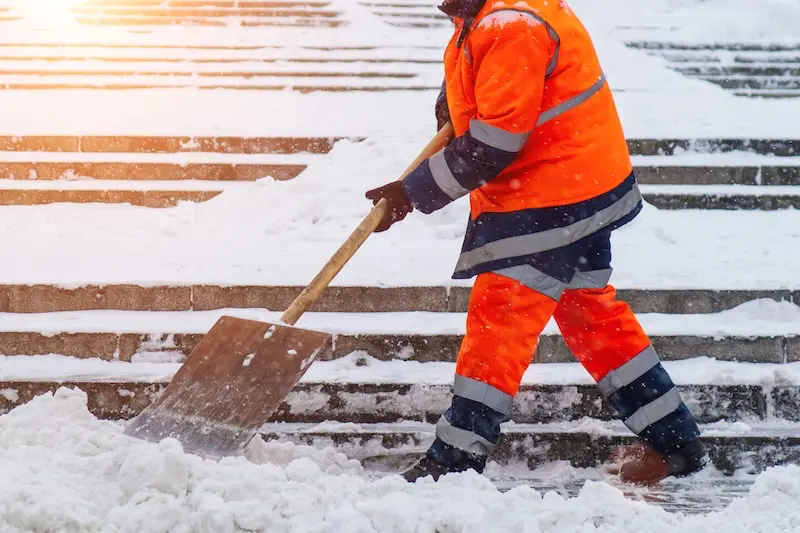
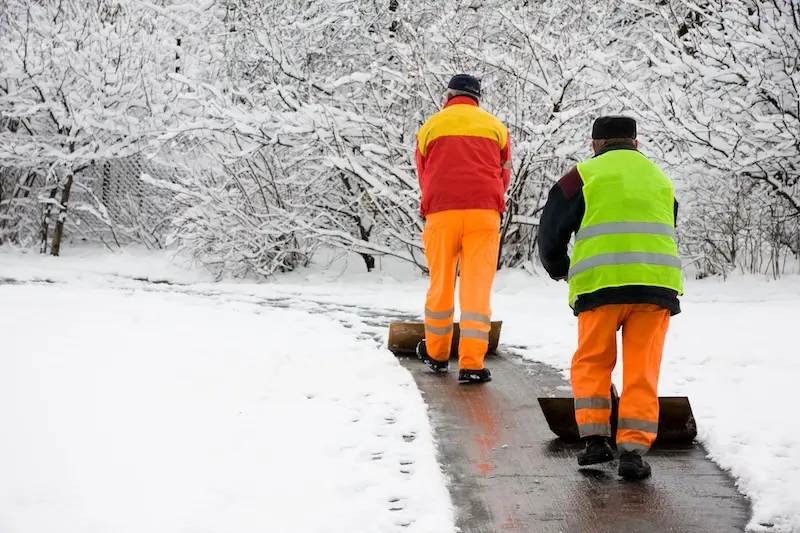
Hi vis workwear for winter is essential for keeping employees visible to drivers and plant operators when shorter days push more working hours into darkness, low light and poor weather across Irish workplaces.
However, dark mornings, early dusk, rain and fog all reduce visibility, and garments chosen without reference to EN ISO 20471 or the working environment can leave real gaps in protection.
In this article, we outline what Irish employers need to know when sourcing hi vis workwear for winter, from legal duties and visibility classes to colour choice, practical features and keeping garments effective through the season.
Why hi vis workwear for winter matters
Throughout the Irish winter, many shifts begin and end in darkness, when workers near vehicles are at their hardest to see.
Low light and darkness on winter shifts
Fluorescent fabric makes the wearer stand out in daylight and dull conditions, while retroreflective strips return light from headlights in the dark. Winter shifts that move between darkness and grey daylight call for both.
What Irish law requires of employers
As PPE, hi-vis must be CE marked under the European Union (Personal Protective Equipment) Regulations 2018, and the Safety, Health and Welfare at Work (General Application) Regulations 2007 require reflective clothing wherever employees must be clearly visible.
Employers must provide hi-vis free of charge where a risk is identified, keep it clean and in good order, and train and supervise employees in its correct use, including keeping jackets and vests fastened for 360° visibility.
Hi-vis is one part of a wider safe system of work, and the Health and Safety Authority (HSA) is clear that keeping pedestrians and vehicles apart remains the most effective control.
Understanding EN ISO 20471 when sourcing hi vis workwear for winter
High-visibility clothing sold in Ireland should comply with EN ISO 20471 and carry its pictogram on the label, with the garment’s class number beside it.
Class 1, 2 and 3 explained
The standard defines three classes based on the minimum area of each material, with Class 3 providing the highest level of conspicuity:
| Minimum visible material (m²) | Class 1 | Class 2 | Class 3 |
|---|
| Fluorescent background material | 0.14 | 0.50 | 0.80 |
| Retroreflective material | 0.10 | 0.13 | 0.20 |
| Combined performance material | N/A | N/A | 0.20 |
In practice, hi-vis trousers worn alone commonly meet Class 1, sleeveless vests commonly meet Class 2, and jackets and sleeved vests commonly meet Class 3.
Class 3 can come from a single garment or a jointly certified combination, such as a jacket and trousers, confirmed on the inner label.

Choosing the right class of hi vis workwear for winter
The correct class should come from a workplace risk assessment rather than habit or price.
Procurement teams should consider:
- The volume and speed of vehicles and mobile plant
- Vehicle size and drivers’ sightlines
- Natural and artificial lighting, by day and at night
- Weather conditions and how long workers are exposed
- The task itself, such as carrying loads that may block an upper-body garment
Where employees work close to moving vehicles, the HSA describes wearing the highest class available as good practice.
Why sleeves and trouser bands matter in hi vis workwear for winter
Reflective bands on the arms and legs help drivers recognise a moving shape as a person, an effect known as biomotion. Annex D of EN ISO 20471 notes that a jacket with banded sleeves outperforms a sleeveless vest, and that trousers alone aren’t recognised as good practice.
Orange or yellow: choosing the right colour of hi vis workwear for winter
EN ISO 20471 approves three fluorescent colours: yellow, orange-red and red. The right choice depends on where the work takes place.
Matching colour to the background and light
Clothing should contrast with its surroundings. The HSA notes that yellow may be preferable indoors or in gloomier conditions where orange is less visible, while orange may stand out better outdoors against green, rural backgrounds where yellow can blend in.
Buyers should also check any client or site rules on colour and class before ordering.
Practical features to look for in hi vis workwear for winter
Winter conditions place extra demands on garments, and a compliant label is only the starting point.
- Weather protection that keeps the hi-vis on show: a standard coat or waterproof worn over a hi-vis vest hides the fluorescent and reflective areas, so hi-vis outer layers are the safer choice. For waterproofing, EN ISO 24232:2025 is now the relevant standard.
- Fit and layering: garments should fit comfortably over winter layers without restricting movement, and involving workers in the choice makes consistent wear more likely.
- Contrast panels: darker panels at the cuffs, abdomen, knees and ankles keep fluorescent areas cleaner in mud and road spray.
- Branding: logos and print must not reduce the fluorescent area below the minimum required for the garment’s class.
Keeping hi vis workwear for winter effective through the season
Winter dirt, rain and frequent washing wear garments down, so employers need a system for replacing them once they no longer perform to their certified class.
Checking for damage and dirt
The key checks are damage to reflective strips and general cleanliness. Care labels should be followed, including the maximum wash count, commonly 25 unless stated otherwise.
The limits of hi-vis: driver blind spots
Even the highest class of hi-vis cannot make a worker visible in a driver’s blind spot. Training pedestrians on vehicle blind spots and restricted sightlines remains an essential part of any winter safety plan.
Source hi vis workwear for winter from Ark Safety
Keep your teams visible through the darker months with high-quality Hi Vis Safety Workwear from Ark Safety. Our hi-vis range includes jackets, parkas, bodywarmers, fleeces, trousers, coveralls, rainsuits and vests in yellow, orange and two-tone options, with embroidery and branding solutions available.
Why businesses across Ireland choose us:
- Expert product and regulatory guidance on class, colour and fit
- Thousands of products from leading PPE and workwear brands
- 95% stock availability on stocked items
- Orders before made 4pm are dispatched for next-day delivery
- Embroidery and branding solutions for a professional team image
From construction and utilities to logistics, aviation and facilities management, we help businesses across Ireland source hi vis workwear for winter. Get in touch today to prepare your workforce for the season ahead!
Hi vis workwear for winter FAQs
Q: What class of hi vis workwear for winter do employees need?
A: A workplace risk assessment should decide, though the HSA advises the highest class available near moving vehicles.
Q: Is orange or yellow hi-vis better in winter?
A: Neither suits every site. Choose the colour that contrasts most with the background and lighting, subject to any client or site rules.
Q: Can a jacket and trousers together achieve Class 3?
A: Yes, provided they are jointly certified as a Class 3 combination, which will be stated on the garments’ inner label.
Q: Do Irish employers have to provide hi-vis free of charge?
A: Yes. Under the 2007 General Application Regulations, employers must provide required PPE free of charge where a risk is identified.
Q: When should winter hi-vis be replaced?
A: Once it no longer performs to its certified class, such as when tape is damaged, fabric is faded or the maximum wash count is reached.
Q: Does Ark Safety supply hi vis workwear for winter?
A: Yes. We supply a range of hi vis winter workwear, such as hi-vis jackets, parkas, bodywarmers, trousers, coveralls and rainsuits, with next-day dispatch on orders placed before 4pm.